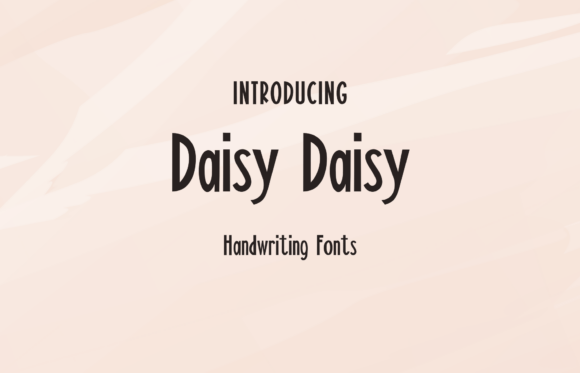
Daisy Daisy: The Handwritten Font That Feels Like a Warm Hug
There's a particular magic in a font that feels instantly approachable. It doesn't just sit on the page; it leans in, smiles, and makes a connection. That's the feeling you get with the Daisy Daisy font. It’s a sweet, friendly handwritten display typeface that manages to be both playful and versatile, a rare combination in the world of creative fonts. Forget the sterile, impersonal default fonts that blend into the background—Daisy Daisy is for projects that demand personality, warmth, and a genuine human touch.
So, what exactly is this font, and why does it resonate so well? Visually, Daisy Daisy mimics the natural, slightly imperfect flow of handwriting. Its letterforms are rounded, with a gentle bounce and subtle variations that give it life. It avoids looking too childish or too messy, striking a balance that feels authentic and inviting. This isn't a script font designed for formal certificates; it's a display font built to be the star of the show in headlines, logos, and short, impactful text blocks. Its charm lies in its ability to convey friendliness, creativity, and a down-to-earth vibe without saying a word.
From Wedding Invites to Game Interfaces: Where Daisy Daisy Shines
The true test of any creative font is its real-world application. Where does a typeface like Daisy Daisy truly belong? The answer is anywhere you want to inject a dose of personality and approachability.
- Branding for Small Businesses & Creatives: Imagine a local bakery's logo, a handmade jewelry shop's branding, or a yoga instructor's website. Daisy Daisy can become the cornerstone of a brand identity that feels personal and trustworthy. It’s perfect for business cards, product tags, and social media profiles where a personal connection is key.
- Packaging Design: On a label for artisanal jam, a craft beer bottle, or organic skincare products, this handwritten font tells a story of care and authenticity. It suggests the product inside is made with love, not just mass-produced.
- Invitations & Stationery: This is its sweet spot. Wedding invitations, birthday party invites, thank-you cards, and even personalized stationery get an instant upgrade. It makes the recipient feel like they’ve received something special and thoughtfully crafted.
- Digital & Editorial Design: Use it for blog post headers, YouTube thumbnails, or chapter titles in a digital magazine to draw readers in. For social media graphics, especially on platforms like Instagram or Pinterest, it creates eye-catching quotes and announcements that stop the scroll. It’s also a fantastic choice for poster design, from indie movie titles to concert flyers and community event promotions.
- Merchandise & Love Shirts: The font's playful nature is ideal for t-shirt designs, tote bags, and mugs. Phrases written in Daisy Daisy feel like inside jokes or personal mantras, perfect for merchandise that people actually want to wear and use.
Even in unexpected places, like the interface of a casual online game or a comic book style project, its legibility at display sizes and fun aesthetic can add a layer of engagement that more traditional fonts lack.
Pairing and Practicality: Making Daisy Daisy Work for You
Falling in love with a font is easy; using it effectively is where the real skill lies. Daisy Daisy is a premium font in spirit, but its power is unlocked through thoughtful application. Here’s how to integrate it into your projects like a pro.
Font Pairing is Everything. As a strong display font, Daisy Daisy should rarely be used for body text. Its readability diminishes in long paragraphs. The key is to pair it with a clean, simple companion. A neutral sans serif font like Montserrat or Lato for body copy creates a beautiful contrast, letting Daisy Daisy headline without causing visual fatigue. For a more classic or editorial feel, pairing it with a timeless serif font like Garamond or Georgia can create a sophisticated yet approachable hierarchy.
Readability and Context are Crucial. Always consider your medium. On a wedding invitation, its size and spacing can be elegant. On a small mobile screen for a website header, ensure it’s large enough to remain clear. Test it! Print a sample or view it on different devices. The goal is to maintain its friendly charm without sacrificing clarity.
Review the Included Styles. Check what comes with the font package. Does it include multiple weights, like regular and bold? Does it have stylistic alternates or ligatures? These extras can provide more flexibility, allowing you to fine-tune the look for different applications within the same project, ensuring visual consistency across all your marketing assets.
Understand the Licensing. This is a non-negotiable step for any commercial project. Whether you're a designer creating assets for a client or a small business owner using it for your own brand, confirm the font's license covers your intended use—be it for digital products, printed materials, merchandise, or logo design. Respecting licensing protects you and supports the creators who make these wonderful design assets possible.
A Font That Builds More Than Just Words
Ultimately, choosing a typeface like Daisy Daisy is a strategic decision. It’s about selecting a visual voice that aligns with your project's goals. In a landscape saturated with generic templates and impersonal designs, a handwritten font can be your secret weapon for audience engagement. It helps build brand recognition by giving your identity a distinct, memorable character. It enhances professional presentation not by being slick and corporate, but by being intentionally and confidently warm.
Think of it as a tool in your modern typography toolkit. You wouldn't use a hammer for every job, and you wouldn't use Daisy Daisy for a legal document. But for the right project—the one that needs to feel personal, creative, and full of life—it’s the perfect choice. It’s the font that turns a simple "hello" into a friendly wave, and a product description into a story. It doesn’t just display words; it communicates feeling. And in a world that often feels disconnected, that might be the most valuable design choice you can make.