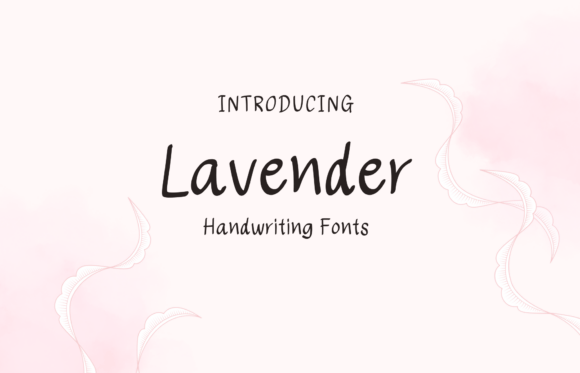
Lavender: The Sweet Handwritten Font for Creative Projects
You know that moment when you're scrolling through fonts, trying to find something that feels just right? Not too formal, not too casual, but somewhere in that sweet spot where personality meets professionalism? That's exactly where Lavender lives. This handwritten display font brings a warmth and approachability that's genuinely hard to find in the world of typography. It's the kind of typeface that makes people smile when they see it—whether it's on a wedding invitation, a product label, or a social media graphic. And honestly, in a design landscape crowded with sterile sans serifs and overly ornate scripts, that friendly, approachable quality is worth its weight in gold.
Why Lavender Works for So Many Different Projects
Here's what makes Lavender stand out from the hundreds of handwritten fonts out there: it strikes a balance between playful and polished. Some handwritten fonts look like they were scribbled in a rush. Others try so hard to be elegant that they lose all personality. Lavender sits comfortably in the middle. The letterforms are consistent enough to read clearly at various sizes, but they still carry that organic, human touch that makes digital designs feel more personal.
Think about the brands and projects you gravitate toward. There's usually something about their visual language that feels inviting. Lavender delivers that feeling naturally. The curves are soft, the spacing is generous, and the overall impression is one of friendliness. It's not trying to be edgy or avant-garde—it's just genuinely pleasant to look at. And sometimes, that's exactly what a project needs.
For small business owners and entrepreneurs, this matters more than you might think. When someone encounters your brand for the first time, typography is one of the first things they process, even if they don't consciously notice it. A font like Lavender immediately signals that your brand is approachable, creative, and human. It tells a story before you've written a single word of copy.
Putting Lavender to Work: Real Applications
Let's talk specifics, because a font is only as good as the projects you use it for. Lavender is surprisingly versatile for a display typeface, and it shines in a wide range of applications.
Wedding invitations and event stationery are perhaps the most natural fit. The handwritten quality adds intimacy and romance without veering into overly formal calligraphy territory. It works beautifully for save-the-dates, RSVP cards, menu cards, and thank-you notes. Paired with a clean serif or sans serif for body text, it creates an elegant hierarchy that feels both modern and timeless.
Packaging design is another area where Lavender excels. If you're selling handmade soaps, artisan candles, baked goods, or any product that benefits from a personal, crafted aesthetic, this font can do a lot of heavy lifting on your labels and boxes. It communicates care and attention to detail—qualities that customers associate with quality products.
Social media graphics need to stop the scroll, and a distinctive font helps enormously. Lavender works well for quote graphics, Instagram stories, Pinterest pins, and Facebook headers. Its readability at medium sizes makes it practical for the quick-glance world of social feeds, where you have maybe two seconds to capture someone's attention.
Logo design is where things get interesting. Lavender isn't the right choice for every brand, but for businesses in the lifestyle, beauty, food, children's products, or creative services space, it can be a fantastic primary or secondary logo typeface. The key is to use it strategically—perhaps for a wordmark or a tagline—rather than as the sole typography across all brand materials.
Blog headers and website accents benefit from the visual interest Lavender brings. Used sparingly for section titles, pull quotes, or call-to-action phrases, it adds personality without sacrificing the readability your site needs for longer content. A blog about cooking, parenting, travel, or crafts would find this font particularly fitting.
Print materials like flyers, posters, brochures, and business cards can all leverage Lavender's charm. For teachers creating classroom materials, it adds a welcoming tone to worksheets, bulletin boards, and certificates. For small business owners designing promotional materials, it helps create a cohesive, memorable look that stands out from the generic templates everyone else is using.
Digital products and merchandise round out the list. Think t-shirt designs, mugs, tote bags, stickers, and digital planners. Lavender's friendly personality translates well to physical products, especially those targeting audiences who appreciate handmade aesthetics and creative expression.
Pairing Lavender with Other Fonts
No font works in isolation, and Lavender is no exception. The most effective designs typically combine two or three typefaces that complement each other without competing. Since Lavender is a display font with a strong personality, it pairs best with more neutral companions.
A classic approach is to combine it with a simple sans serif like Montserrat, Open Sans, or Lato for body text. These fonts are clean, highly readable, and don't compete with Lavender's character. The contrast between the handwritten display font and the structured sans serif creates visual interest while maintaining clarity.
For a slightly more sophisticated feel, try pairing Lavender with a transitional or modern serif like Georgia, Merriweather, or Playfair Display. This combination works particularly well for wedding stationery, editorial layouts, and lifestyle branding where you want to balance warmth with elegance.
The general rule of thumb is to let Lavender do the talking in headlines, titles, and accent text, while keeping everything else simple and understated. If you use Lavender for both headings and body copy, you'll likely overwhelm the reader and lose the very charm that makes the font appealing in the first place.
Practical Considerations Before You Commit
Before you download and start using any font—including Lavender—there are a few practical things worth thinking about.
Readability at different sizes is always worth testing. Display fonts like Lavender are designed to look their best at larger sizes. If you're planning to use it for small text, like captions or fine print, test it thoroughly. Print out a sample at the actual size you'll use, or view it on multiple screens, to make sure it remains legible.
Licensing matters, especially if you're using the font for commercial purposes. Always review the license terms before incorporating a font into client work, products for sale, or business branding. Some fonts are free for personal use but require a paid license for commercial applications. Understanding these terms upfront saves headaches later and ensures you're respecting the work of the type designer who created it.
File formats and included styles are worth checking too. Does the font include multiple weights? Are there alternate characters or ligatures? Does it support the language you need? These details might seem minor, but they can significantly impact your design flexibility. A premium font with multiple styles and thoughtful extras gives you more creative options and better long-term value.
Consider your audience honestly. Lavender's sweet, friendly personality is perfect for certain brands and projects, but it might not be the right fit for a law firm, a fintech startup, or a luxury watch brand. Typography should always serve the message and the audience, not just the designer's personal taste. If your audience expects authority and seriousness, a handwritten display font might undermine that perception. If they value creativity and approachability, Lavender could be exactly right.
Making Typography a Strategic Choice
The best designers and brand builders treat font selection as a strategic decision, not an afterthought. Every typeface carries associations, emotions, and expectations. When you choose Lavender, you're choosing to present your project as friendly, creative, and personal. That's a powerful message when it aligns with your goals.
Take the time to test the font in context. Mock up your actual project—don't just look at the font in isolation. Place it on your website, print it on your packaging, view it in your social media templates. See how it feels alongside your images, your color palette, and your other design assets. Typography doesn't exist in a vacuum, and the only way to know if a font truly works for your project is to see it in action.
Lavender is a creative font with a lot to offer designers, entrepreneurs, and hobbyists who want to add a genuine, human touch to their work. Whether you're designing a wedding suite, building a brand identity, creating merchandise, or simply looking for a typeface that brings warmth to your next project, it's well worth exploring. Just remember to pair it thoughtfully, test it thoroughly, and make sure its personality matches the story you're trying to tell.