Horrible Histories: The Font That Brings Dark Tales to Life
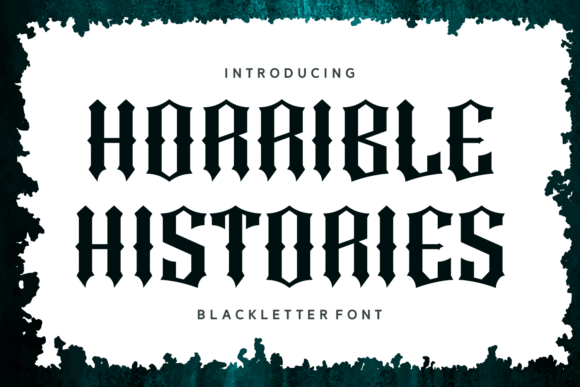
There's a moment in every design project where the typography either whispers politely or screams with intention. If you're working on something that needs to feel ominous, medieval, or steeped in dark legend, you don't want a font that plays it safe. You want something that looks like it was scratched into parchment by candlelight, something with teeth. That's exactly the energy Horrible Histories brings to the table—a blackletter display typeface that doesn't just sit on your canvas but commands it.
Inspired by medieval manuscripts and the shadowy corners of history, this font features spiked serifs, sharp angular edges, and characters packed tightly together to create a wall of dramatic texture. It's not trying to be friendly or approachable. It's designed to evoke unease, grandeur, and intensity. Think horror movie titles, gothic event posters, heavy metal album covers, or the branding for a haunted attraction. If your project deals with dark fantasy, historical drama, or anything that benefits from a sense of foreboding, this typeface understands the assignment.
Where This Typeface Really Shines
Let's get practical. A font like Horrible Histories isn't your everyday body text choice, and it shouldn't be. It's a display font, meaning it's built for headlines, logos, and short bursts of text where visual impact matters more than long-form readability. Here's where designers and creators tend to get the most out of it:
- Logo design for escape rooms, haunted houses, breweries with dark themes, or indie game studios
- Packaging for craft beverages, specialty hot sauces, or artisanal products with a rugged or historical identity
- Event posters for Halloween events, gothic festivals, theatrical productions, or true crime podcasts
- Social media graphics where you need a single word or phrase to stop someone mid-scroll
- Merchandise like t-shirts, enamel pins, or stickers for brands that lean into dark aesthetics
- Book covers and editorial layouts for horror fiction, historical narratives, or fantasy series
- Website headers and hero sections that set a moody, atmospheric tone immediately
- Invitations for themed parties, murder mystery dinners, or unconventional weddings
The key is using it where it can breathe. Give it space around the edges, let it sit large, and don't crowd it with competing visual elements. When used correctly, a single word set in Horrible Histories can carry more emotional weight than an entire paragraph in a neutral typeface.
Pairing It With Other Fonts
One of the most common mistakes with dramatic display fonts is using them in isolation without considering how they interact with supporting text. Horrible Histories works best when paired with something clean and understated. A simple sans serif font for body copy, like a geometric or humanist sans, creates a beautiful contrast. The blackletter does the heavy lifting for atmosphere, while the secondary font handles the actual information your audience needs to read.
For example, if you're designing a poster for a gothic theater production, you might set the show title in Horrible Histories at a large size, then use a font like Montserrat or Raleway for dates, venue details, and ticket information. The contrast between the ornate and the minimal makes both elements stronger. It also ensures your audience can actually find the practical details without squinting.
Script fonts and handwritten fonts can work in some combinations, but be cautious. Too many expressive typefaces competing for attention creates visual noise. If you're pairing Horrible Histories with anything other than a clean sans serif or a simple serif font, test it carefully at the actual size it will appear. What looks dramatic on a large monitor can become illegible on a phone screen or a printed flyer.
Readability and Real-World Use
Let's address the elephant in the room. Blackletter fonts are not known for instant readability, especially for audiences unfamiliar with this style. That's not a flaw—it's a feature of the genre. But it does mean you need to be thoughtful about context.
Use Horrible Histories for words and phrases people will recognize quickly: brand names, single-word titles, short taglines. Avoid setting full sentences or paragraphs in it. If someone has to decode your headline letter by letter, you've lost the impact. The goal is atmosphere and recognition, not a reading exercise.
Also consider your audience. If you're designing for a younger demographic or a mainstream consumer product, test the font with people outside the design world. What feels edgy and cool to a designer might feel illegible or off-putting to a casual viewer. The best creative fonts are the ones that communicate a mood instantly without requiring a design degree to appreciate.
Licensing and Commercial Considerations
If you're planning to use Horrible Histories for a commercial project—and the description suggests it's built for exactly that—make sure you understand the licensing terms before you commit. Most premium fonts come with different license tiers depending on usage: desktop, web, app, or server. Some licenses cover a specific number of users or impressions.
For small businesses and independent creators, this matters. You don't want to build your entire brand identity around a typeface only to discover your license doesn't cover merchandise printing or web embedding. Read the fine print. Reputable font foundries and marketplaces make licensing terms clear, and many offer extended licenses for broader commercial use.
It's also worth noting that investing in a well-crafted commercial font pays dividends in brand consistency. When you own a proper license, you can use the same typeface across your website, packaging, social media, and print materials without worrying about attribution requirements or usage restrictions that come with many free fonts.
Building a Brand Identity Around Dark Typography
Typography is one of the fastest ways to communicate brand personality. Before someone reads a single word of your copy, they've already absorbed the feeling of your font choice. A typeface like Horrible Histories tells your audience something specific: this brand is bold, unconventional, and steeped in a particular aesthetic.
If you run a business that thrives on atmosphere—a craft distillery, a tattoo studio, a vintage oddities shop, a true crime media brand—your typography should reflect that world. Consistency across every touchpoint builds recognition. When customers see that same sharp blackletter on your Instagram posts, your bottle labels, and your storefront signage, they start to associate that visual language with your brand specifically.
That's the real power of choosing the right display font. It's not just decoration. It's identity. And for brands that live in the darker, more dramatic corners of the market, Horrible Histories offers a visual shorthand that's immediate, memorable, and impossible to ignore.