Baleho Dancing: The Handwritten Script with a Free Spirit
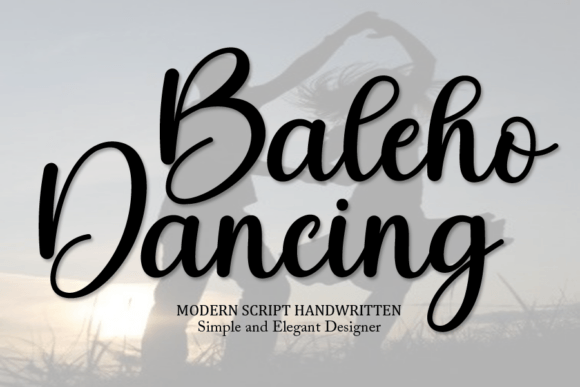
There’s a particular feeling you get when you see a design that just breathes. It’s not overly polished or sterile. It feels personal, like a note passed in class or a signature scrawled with confidence. That’s the immediate charm of a script like Baleho Dancing. It doesn’t try to be perfect; it embraces a random, free-style energy that’s incredibly hard to manufacture. For anyone building a brand, launching a product, or creating content, this kind of authenticity is pure gold. It’s the visual equivalent of a relaxed conversation, and it makes people stop and pay attention in a world of rigid, digital precision.
More Than Just a Font: A Vibe You Can Use
At its heart, Baleho Dancing is a classic handwritten script. But calling it just that feels like calling a sunset "nice." Its true power lies in its personality. The slightly irregular baselines, the natural flow of the letterforms, and the casual, almost spontaneous strokes give it a human touch that polished sans-serifs can't replicate. This isn't a font that whispers; it has a confident, approachable voice. Think about the last time a hand-lettered logo on a coffee bag or a playful script on a bakery window made you smile. That emotional connection is what this typeface is built to create.
This makes it a fantastic tool for projects where connection is key. A small business owner designing a logo for a boutique clothing line, a content creator making Instagram stories feel more personal, or a wedding planner crafting an invitation suite—all are tapping into the same need for warmth and individuality. Baleho Dancing serves as a direct line to that feeling, helping designs stand out not by being louder, but by being more relatable.
Practical Magic: Where This Script Truly Shines
Knowing a font has personality is one thing; knowing exactly where to deploy it is another. The versatility of a creative font like this is one of its biggest strengths. It’s not limited to a single niche, which makes it a valuable asset in any designer's toolkit.
- Branding & Logo Design: For brands in the lifestyle, artisan, food, or creative spaces, a script font can be the cornerstone of the identity. It instantly communicates craftsmanship and a hands-on approach. Imagine a coffee roaster’s logo or the masthead for a craft blog—it sets the tone immediately.
- Packaging & Merchandise: On a label for handmade soap, a sticker for a laptop, or the front of a tote bag, this font style adds a layer of charm and perceived value. It turns a product into a story.
- Digital Presence: Use it strategically in website headers, blog post titles, or social media graphics to break the monotony of standard web fonts. It’s perfect for call-to-action buttons or quote graphics that you want to feel inspiring and personal.
- Print & Editorial: Think beyond digital. It works beautifully on posters for community events, book covers for memoirs or children's stories, and magazine headlines where you want to evoke a specific, casual mood.
Smart Design: Pairing and Practicality
A great script font rarely works alone. The real skill in modern typography is in the pairing. Because Baleho Dancing has such a strong, expressive character, it needs a quieter partner to let it sing. This is where the classic design principle of contrast comes into play.
Pair it with a clean, simple sans-serif font for body text. A neutral typeface like a geometric or humanist sans-serif will provide a calm, readable foundation that doesn’t compete for attention. This pairing ensures your headlines grab the eye with personality, while your paragraphs remain clear and easy to read. For a more layered look, you could even introduce a simple serif for certain subheadings, creating a hierarchy that feels both dynamic and structured.
Always consider the context of your project. If you’re designing a website, test the font at various sizes on different screens to ensure key messages remain legible. For print, get a physical proof. The goal is to use the font’s free-spirited nature to enhance communication, not hinder it. A headline in Baleho Dancing on a poster is engaging; a full paragraph of instructions in it would be exhausting.
Making It Work for Your Brand Identity
Consistency is the bedrock of brand recognition. Choosing a typeface like Baleho Dancing for a specific element of your visual identity—say, your primary headline font or logo wordmark—and using it consistently across all touchpoints builds a cohesive image. When a customer sees that familiar, friendly script on your Instagram post, your website, and your product packaging, it creates a powerful sense of unity and reliability.
This doesn’t mean you need to use it everywhere. In fact, its impact is greatest when used thoughtfully as a accent. Designate it for your brand’s name, tagline, or key promotional phrases. This strategic application allows the font’s engaging personality to become a signature part of your brand’s voice without overwhelming every piece of communication. It becomes a recognizable asset, much like a specific color palette or a graphic style.
Final Thoughts on Choosing Your Creative Toolkit
Selecting a typeface is a creative decision with real-world implications. It’s worth taking the time to explore the full character set of any font you’re considering. Look for alternate letters, ligatures, and stylistic sets that can add variety and custom flair to your designs. These features are the marks of a premium font, allowing you to avoid repetition and keep your layouts fresh.
Before you commit to a commercial font for a major project, always double-check the licensing. Ensure it covers your intended use, whether that’s for a client’s logo, a digital product you’ll sell, or merchandise for your own shop. This simple step protects your work and respects the creator’s effort.
In the end, a typeface like Baleho Dancing is more than just a design asset. It’s a tool for storytelling. It offers a way to cut through the noise with authenticity, to build brands that feel human, and to create designs that resonate on a personal level. In a world that often feels automated, that kind of genuine connection is something worth designing for.